Yonatan's PLCY380 Website
Challenge Submissions
Changemaker Challenge 1
Communication barriers in healthcare and their impact on patient safety
September 23, 2025Changemaker Challenge 2
Build Your Network: Interviews on healthcare inequity
October 5, 2025Changemaker Challenge 3
Create Your Own: Conversation with a nurse on the front lines
October 31, 2025Changemaker Challenge 5
Purchase Challenge: Local USDA Organic honey
November 14, 2025Changemaker Challenge 6
Donation Challenge: Clothing drive for Unique Community Donation Center
November 30, 2025Changemaker Challenge 1
Yonatan Tussa | PLCY380 (0101) | 9/23/25
Challenge A: Collect Resources
- Adler, S. (2023, December 23). Effects of poor communication in healthcare. HIPAA Journal. Retrieved from https://www.hipaajournal.com/effects-of-poor-communication-in-healthcare/
- Person, Volansky, R., & Rob Volansky. (2024, August 26). Communication breakdown: Language barriers a "major cause" of disparities. Healio. https://www.healio.com/news/rheumatology/20240822/communication-breakdown-language-barriers-a-major-cause-of-disparities
- Public Broadcasting Service. (n.d.-b). Impacts of Language Barriers in Healthcare Access. PBS. https://www.pbs.org/video/impacts-of-language-barriers-in-healthcare-access-0ds86l/
- Agency for Healthcare Research and Quality (AHRQ). (2013). Preventing falls in hospitals: A toolkit for improving quality of care. Rockville, MD. Retrieved from https://www.ahrq.gov/professionals/systems/hospital/fallpxtoolkit/index.html
- TEDx Talks. (n.d.). How language barriers undermine healthcare outcomes | Yasmin Mulji | TEDxNHS. YouTube. https://www.youtube.com/watch?v=wkfxEoEgozo
- Newzroom Afrika. (n.d.-a). Healthcare barrier: poor communication between doctors, patients. YouTube. https://www.youtube.com/watch?v=oJL1rFACWB4
- A Morrow, A Knighton, 668 IMPROVING ACCESS TO CALL BELLS: LESSONS FROM THE PANDEMIC, Age and Ageing, Volume 51, Issue Supplement_1, March 2022, afac034.668, https://doi.org/10.1093/ageing/afac034.668
- Bartlett, G., Blais, R., Tamblyn, R., Clermont, R. J., & MacGibbon, B. (2008). Impact of patient communication problems on the risk of preventable adverse events in acute care settings. CMAJ, 178(12), 1555–1562. https://doi.org/10.1503/cmaj.070690
- Heng, H., Kiegaldie, D., Slade, S. C., Jazayeri, D., Shaw, L., Knight, M., Jones, C., Hill, A. M., & Morris, M. E. (2022). Healthcare professional perspectives on barriers and enablers to falls prevention education: A qualitative study. PLOS ONE, 17(4), e0266797. https://doi.org/10.1371/journal.pone.0266797
- Hurtig, R. R., Alper, R. M., & Berkowitz, B. (2018). The cost of not addressing the communication barriers faced by hospitalized patients. Perspectives of the ASHA Special Interest Groups, 3(12), 99–112. https://doi.org/10.1044/persp3.SIG12.99
- IMARC Group. (n.d.). Elderly and disabled assistive devices market size 2025-33. Retrieved February 13, 2025, from https://www.imarcgroup.com/elderly-disabled-assistive-devices-market
- John-Baptiste, A., Naglie, G., Tomlinson, G., Alibhai, S. M., Etchells, E., Cheung, A., Kapral, M., Gold, W. L., Abrams, H., Bacchus, M., & Krahn, M. (2004). The effect of English language proficiency on length of stay and in-hospital mortality. Journal of General Internal Medicine, 19(3), 221–228. https://doi.org/10.1111/j.1525-1497.2004.21205.x
- M Noor, M F Islam, C Spice, 985 A QUALITY IMPROVEMENT PROJECT ON CALL BELL IN REACH IN AN ACUTE OLDER PERSON MEDICINE WARD (AGE > 85 YEARS), Age and Ageing, Volume 51, Issue Supplement_2, June 2022, afac126.038, https://doi.org/10.1093/ageing/afac126.038
- Prevalence and causes of paralysis—United States, 2013. (2013). American Journal of Public Health.
- Stransky, M. L., Jensen, K. M., & Morris, M. A. (2018). Adults with communication disabilities experience poorer health and healthcare outcomes compared to persons without communication disabilities. Journal of General Internal Medicine, 33(12), 2147–2155. https://doi.org/10.1007/s11606-018-4625-1
- Tzeng, H. M., Titler, M. G., Ronis, D. L., & colleagues. (2012). The contribution of staff call light response time to fall and injurious fall rates: An exploratory study in four US hospitals using archived hospital data. BMC Health Services Research, 12, Article 84. https://doi.org/10.1186/1472-6963-12-84
Reflection
I learned how strongly poor communication (language barriers, misunderstanding of needs, delay in response) impacts patient safety and outcomes, from longer hospital stays and higher fall risks to disparities in care. These issues, not just individualized misunderstandings. Identifying examples of harm caused by communication barriers was successful. Finding solutions that fit all patients was least successful. Tools like accessible call bells are helpful but don't solve deeper language or cultural issues. I would focus on patient-centered assistive technologies and multilingual support rather than procedural fixes, sense devices and translation can directly bridge gaps. Procedural fixes can also make the experience even more "checklisty", with medical personnel going down a checklist and ticking boxes rather than understanding the patient. This challenge helps me better understand the underlying issues and importance of integrating communication support into any healthcare innovation I work on. My one question is as follows:
How can healthcare systems balance cost and scalability while making sure every patient gets equal access to effective communication?
Changemaker Challenge 2
Yonatan Tussa | PLCY380 (0101) | 10/5/25
Challenge A: Build Your Network
Interview 1: Susan Stempek – Vice President, Hospital at Home @ Beth Israel Lahey Health
Contacted via: LinkedIn DM
- What is your role, and how does it connect to healthcare delivery?
- What challenges of healthcare inequity have you observed in your work?
- How does the hospital-at-home model affect access for vulnerable populations?
- What are the biggest barriers underserved patients face in using hospital-at-home programs?
- How can health systems ensure these programs don’t widen inequities?
- What lessons could be applied nationally, especially in rural or low-income communities?
- How do insurance or reimbursement structures shape who gets access?
Summary
I interviewed Susan Stempek, Vice President of the Hospital at Home program at Beth Israel Lahey Health, which spans 14 hospitals in Boston. She emphasized that her work feels like running a startup within a health system, requiring new infrastructure and integration into existing hospitals. When viewed through the lens of healthcare inequity, Susan revealed both opportunities and risks. On one hand, hospital-at-home can improve patient outcomes by allowing people to recover in familiar environments where they move more and maintain independence. She noted that older patients or those with cognitive conditions (such as dementia) may particularly benefit, avoiding the negative effects of being immobilized in a hospital. However, inequity surfaces in who can realistically access the program. Patients must have a safe, stable home environment and often reliable internet access—barriers that could exclude low-income or housing-insecure populations. Susan also raised concerns about cost effectiveness: while some hospitals adopt the model to address capacity shortages, she questioned whether it would truly save money at scale, especially in areas with higher costs of living. A surprise was that hospital-at-home strengthens the patient-clinician relationship, as nurses spend more time teaching patients self-care. This could democratize healthcare knowledge if programs are implemented equitably. My major takeaway is that hospital-at-home represents both an innovation in care delivery and a test of equity. Without careful design, it could unintentionally deepen disparities by serving only patients with the resources to qualify.
Interview 2: Gihyeon – Medical Doctor, Korea
Contacted via: Slack
- How do you currently communicate with patients who have severe speech or mobility difficulties?
- What is the hardest part about communicating with these patients?
- How frequently are patients checked on, and who is responsible for those check-ins?
- How do staff shortages impact patient safety and communication?
- Are patient falls a significant issue in your facility? What are the main causes?
- How effective is the current nurse call system for patients with limited mobility?
- What is currently being done to improve communication and reduce falls?
Summary
I interviewed Gihyeon, who shared his experience with patient communication in Korean hospitals, particularly for those with limited speech or mobility. Communication for these patients is often reduced to responses such as nodding, blinking, or writing if possible. This approach is inconvenient, strips away nuance, and can make it very difficult for staff to understand patient needs. Gihyeon explained that while most patients can still speak and use a standard nurse call button, the small group who cannot are often the ones most left behind. He noted that staff shortages compound inequities. In ICUs, one nurse typically cares for three patients, with checks at least hourly, while in general wards nurses round only every 6–8 hours. Patient falls are a major safety issue, especially when patients attempt to move without assistance to reach the bathroom. In Korea, some families hire private aides to fill this gap, but many cannot afford to.
Additional Contacts
I also reached out to the following professionals during this challenge:
- Evan Pankey - Healthcare Startup Adviso - Contacted via: Email
- Patrina Turnbow - Director of Nursing at Regency Care - Contacted via: In-person
- Dagne Bunnute - Registered Nurse - Contacted via: In-person
Reflection
This challenge helped me see the value of asking more direct questions as I build my network and it informed how I frame future conversations. Preparing questions but also giving the interviewee space to lead the conversation made the conversations flow really well. I can’t think of anything I would do differently. I feel like I have a good amount of context about the issue now moving forward. I’m wondering how programs like hospital-at-home can be adapted for patients in low-income or rural areas, and what policy changes could help these models narrow inequities rather than widen them.
Changemaker Challenge 3
Yonatan Tussa | PLCY380 (0101) | 10/31/25
Challenge C: Create Your Own
For this challenge, I spoke with a family member who works as a nurse in a Maryland hospital. My issue area is communication barriers in healthcare, and I wanted to learn more about how these barriers affect patient safety, health outcomes, and staff workload particularly in Maryland. This helped me better be able to connect research to real-world practice. Maryland has a diverse patient population, and my family member shared that communication challenges are an everyday reality, especially with patients who have limited English proficiency, speech or cognitive impairments, or rely on assistive devices.
During our conversation, my interviewee shared examples where language barriers and communication challenges slowed down care delivery and caused misunderstandings. They mentioned how patients with limited English proficiency often rely on family members or phone translation services, which can delay treatment during emergencies. They also said that patients with communication limitations like paralysis, dementia, or speech disorders struggle to call for help, and not responding quickly can increase fall risk. This matches up with what I read previously, showing that slow call response times correlate with higher fall rates (Tzeng et al., 2012) and that patients with communication disabilities experience poorer outcomes (Stransky et al., 2018). They also mentioned that interpreter services exist but staffing shortages and time pressure make it difficult to use them consistently.
Reflection
This challenge showed me that communication barriers involve all sorts of things, including language barriers but also physical disabilities, cognitive decline, and emotional stress. Hearing a nurse describe moments where patient safety was at risk confirmed how urgent and widespread this issue is. One thing that was successful was connecting real clinical experiences to the research I've been reading. The examples lined up with studies showing increased fall risk, delayed care, and worse outcomes when communication breaks down. What was less successful was realizing there is no single solution. Current solutions like interpreters and call systems help, but they don't always keep up with demands or patient needs at the moment. If I were to do this challenge again, I would also speak with a patient or caregiver to better understand the emotional side of feeling unheard or unable to communicate in a medical setting. This challenge will help me moving forward by reminding me that any healthcare innovation needs to take into account accessibility, patient dignity, and real-world constraints. Now, I'm thinking about how hospitals can scale communication support in a way that is efficient for staff and equitable across different care settings and patient demographics.
Changemaker Challenge 5
Yonatan Tussa | PLCY380 (0101) | 11/14/25
Challenge G: Purchase Challenge
Product Purchased
Local USDA Organic honey from a Maryland farmer’s market (new purchase made specifically for this challenge).
Labels Identified
- USDA Organic – A federally regulated label under the National Organic Program (NOP). No synthetic pesticides or fertilizers, no GMOs, annual inspections, and documented practices that protect soil and ecosystem health.
- Local (Maryland-grown) – Not federally regulated, but verified at the community level by the farmer’s market through vendor screening and farm location requirements.
Reflection
This challenge helped me see how something as simple as buying honey connects to larger questions about equity, access, and responsible systems. I learned how regulated labels like “USDA Organic” represent real environmental and production standards, while “local” reflects community accountability, which made me think about who gets access to ethical products in the first place. What worked well was being intentional, slowing down to ask questions and understand the labels. The harder part was navigating vague or unregulated claims that make ethical purchasing confusing. If I did this again, I would compare multiple products and talk more with producers to understand the cost and accessibility barriers. Moving forward, this experience will help me evaluate systems and claims more critically, which connects directly to my broader interest in designing equitable, user-centered technologies. It also left me with questions about how ethical products can be made more affordable, whether labels like “local” should be standardized, and how policy could support more equitable access to responsibly produced goods.
Changemaker Challenge 6
Yonatan Tussa | PLCY380 (0101) | 11/30/25
Challenge B: Donation Challenge
Event Details
- Title: Clothing Donation Drive for Unique Thrift
- Date: November 30, 2025
- Location: Unique Thrift / Community Donation Center - Silver Spring, MD
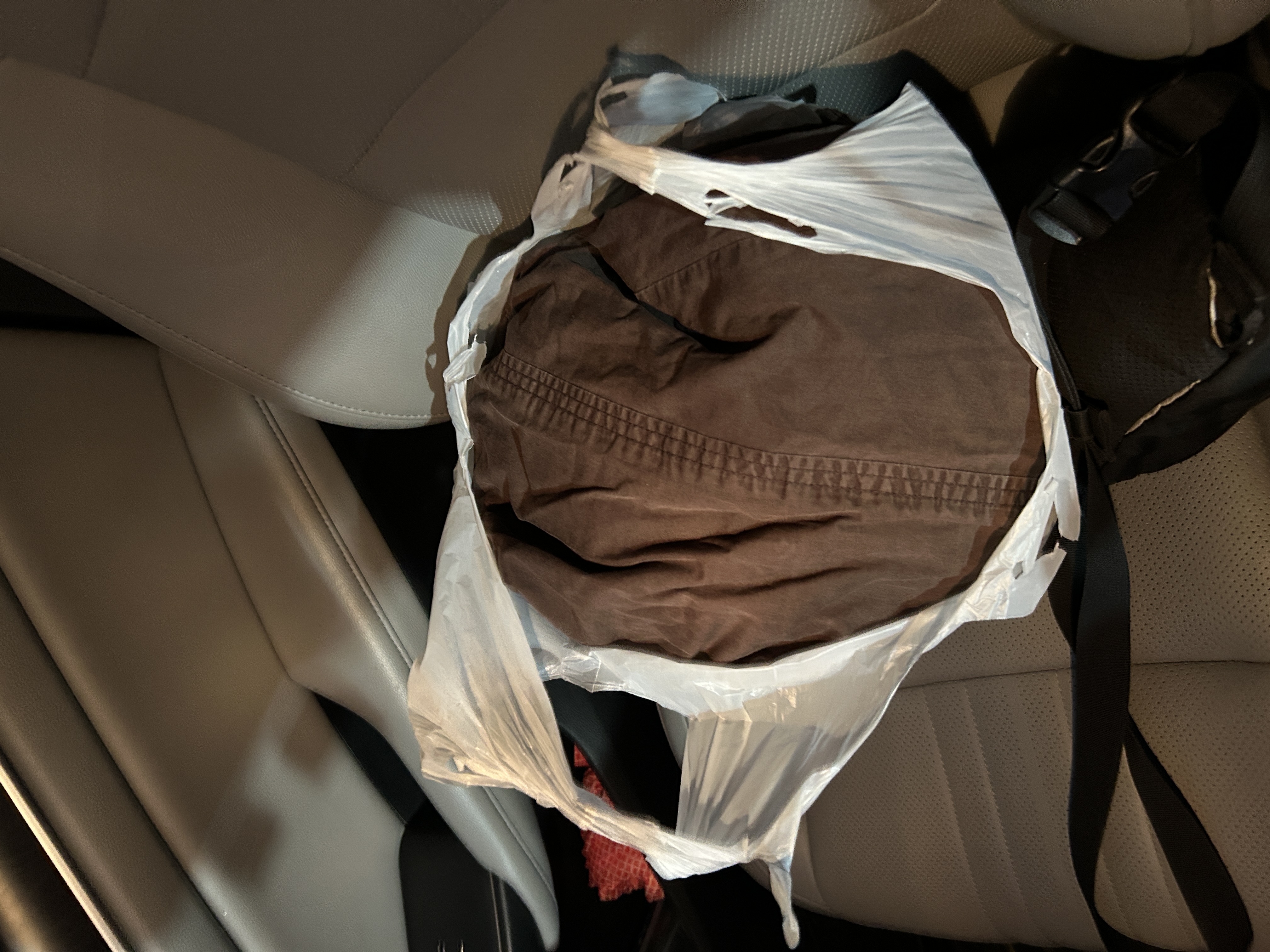
- Confirmation: Photo of donation drop-off included below
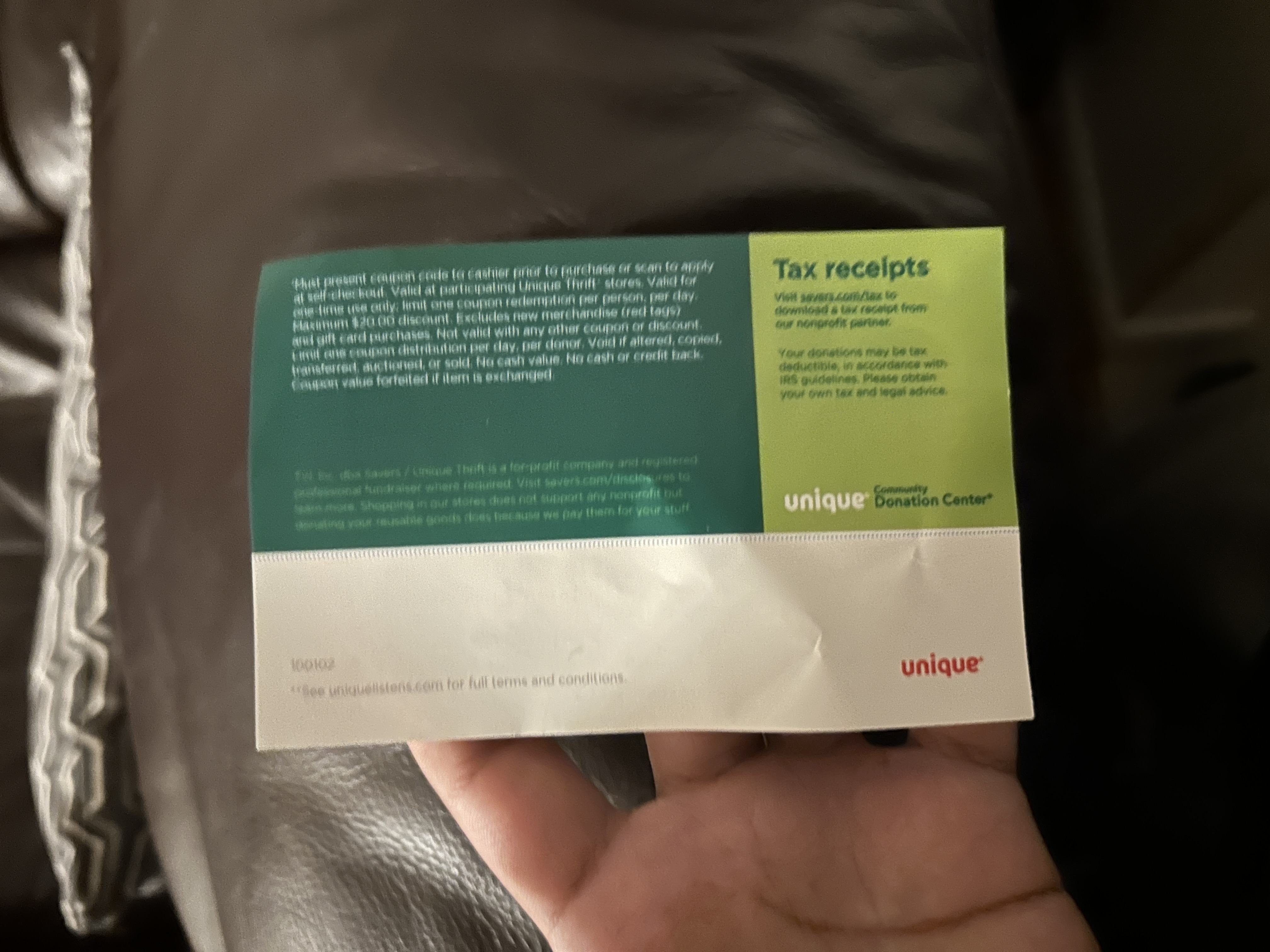
- Documentation: Donation receipt included below
Summary of the Activity
For this challenge, I organized a clothing donation drive to support the Unique Community Donation Center in Silver Spring, MD. Unique is a thrift store that sells clothing and other items, which is especially helpful for local low-income families, recent immigrants, and people facing financial or housing instability. Over the course of the week, I reached out to friends and family and asked for gently used clothes they no longer wore. Two people donated items, including jackets, sweaters, and pants. I sorted the clothing by category and bagged everything to make it easier for staff to process. On November 30, I dropped off the clothing at the Unique donation center in Silver Spring.
Documentation

Biggest Takeaways
- Convenience drives participation. People were much more willing to donate when all they had to do was hand me a bag and I handled sorting and drop-off.
- Small efforts still matter. Even a small, informal effort resulted in low-cost clothing for the community.
- Ther's a lot of behind-the-scenes work. Sorting, cleaning, and transporting items gave me more appreciation for the daily labor of staff.
Reflection
This challenge helped me better understand how clothing insecurity fits into the broader issue of economic instability, something often overshadowed by food or housing needs but just as needed for warmth and daily functioning. One of the most successful parts of the drive was how willing people were to donate once the process was made simple. The least successful aspect was timing, since starting earlier and advertising more probably would have allowed more people to participate. If I were to do this again, I would partner with a student organization, create a flier or social media post, and focus more intentionally on high-need items like winter coats and shoes. Completing this challenge will help me moving forward by reminding me that small, localized actions can still address structural problems meaningfully, especially when you get others in on it. After completing the drop-off at Unique Thrift, I wonder how donation centers manage fluctuating seasonal needs.